How to Measure Shirt Size at Home for the Perfect Fit

Learn how to measure shirt size accurately using a tape measure. Discover the correct way to measure neck, chest, shoulders, sleeves, and shirt length to ensure a perfect fit every time.

Buying shirts online has become easier than ever. However, choosing the right size remains one of the biggest challenges. Many people rely on standard size labels such as Small, Medium, Large, or XL, only to discover that the shirt does not fit as expected.

The good news is that learning how to measure shirt size is simple and only takes a few minutes. With a measuring tape and a well fitting shirt, you can determine your exact measurements and make more confident purchasing decisions.

A few accurate measurements can save time, reduce returns, and help you find shirts that look and feel better. In this guide, you will learn the correct way to measure your neck, chest, shoulders, sleeves, and shirt length at home.

Why Accurate Shirt Measurements Matter
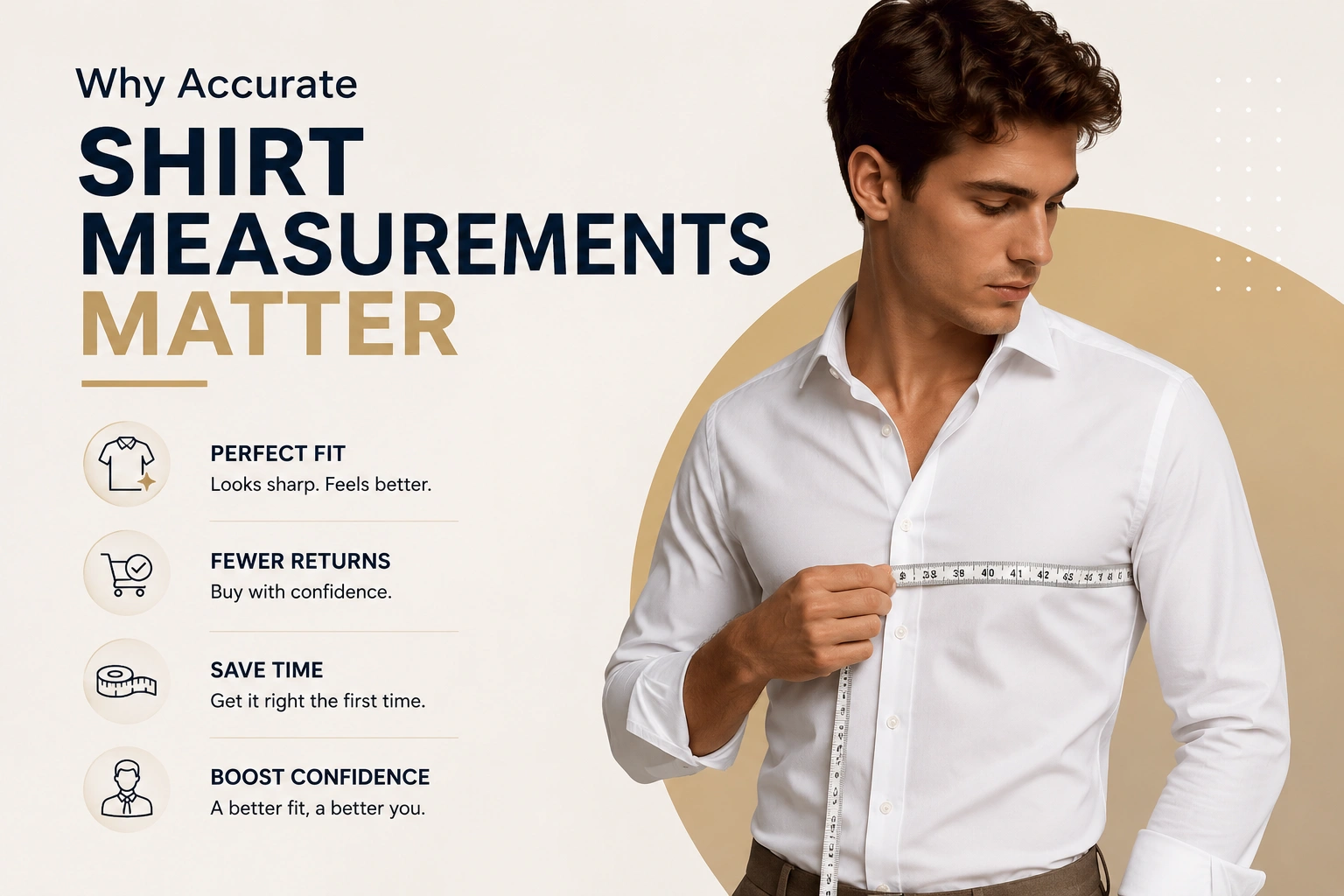
Why accurate shirt measurements matter for achieving the perfect shirt fit and reducing sizing mistakes
Accurate shirt measurements help improve fit, comfort, confidence, and reduce online shopping returns.
``` Title: Why Accurate Shirt Measurements Matter Caption: Accurate measurements help you choose better fitting shirts and avoid costly sizing mistakes. Description: Informative infographic explaining the importance of accurate shirt measurements for online shirt shopping, comfort, appearance, confidence, and reduced returns.

Why Accurate Shirt Measurements Matter

A shirt does not need to be expensive to look good. It simply needs to fit correctly. Yet sizing issues remain one of the most common frustrations for people shopping online. A collar that feels restrictive, sleeves that stop too early, or shoulders that droop beyond the natural shoulder line can completely change how a shirt looks and feels.

Knowing your measurements removes much of this uncertainty. Rather than guessing between Medium and Large, you can compare actual numbers against a brand's size chart and make a more informed choice.

Accurate measurements can help you:

  • Shop confidently across different clothing brands
  • Reduce the likelihood of returns and exchanges
  • Improve day to day comfort
  • Achieve a cleaner and more tailored appearance
  • Save time spent comparing multiple sizes

One thing experienced online shoppers quickly learn is that size labels are not standardized. A shirt marked as Large in one brand may fit similarly to a Medium in another. This is why measurements provide a far more reliable reference point than size names alone.

Tools You Need Before Measuring
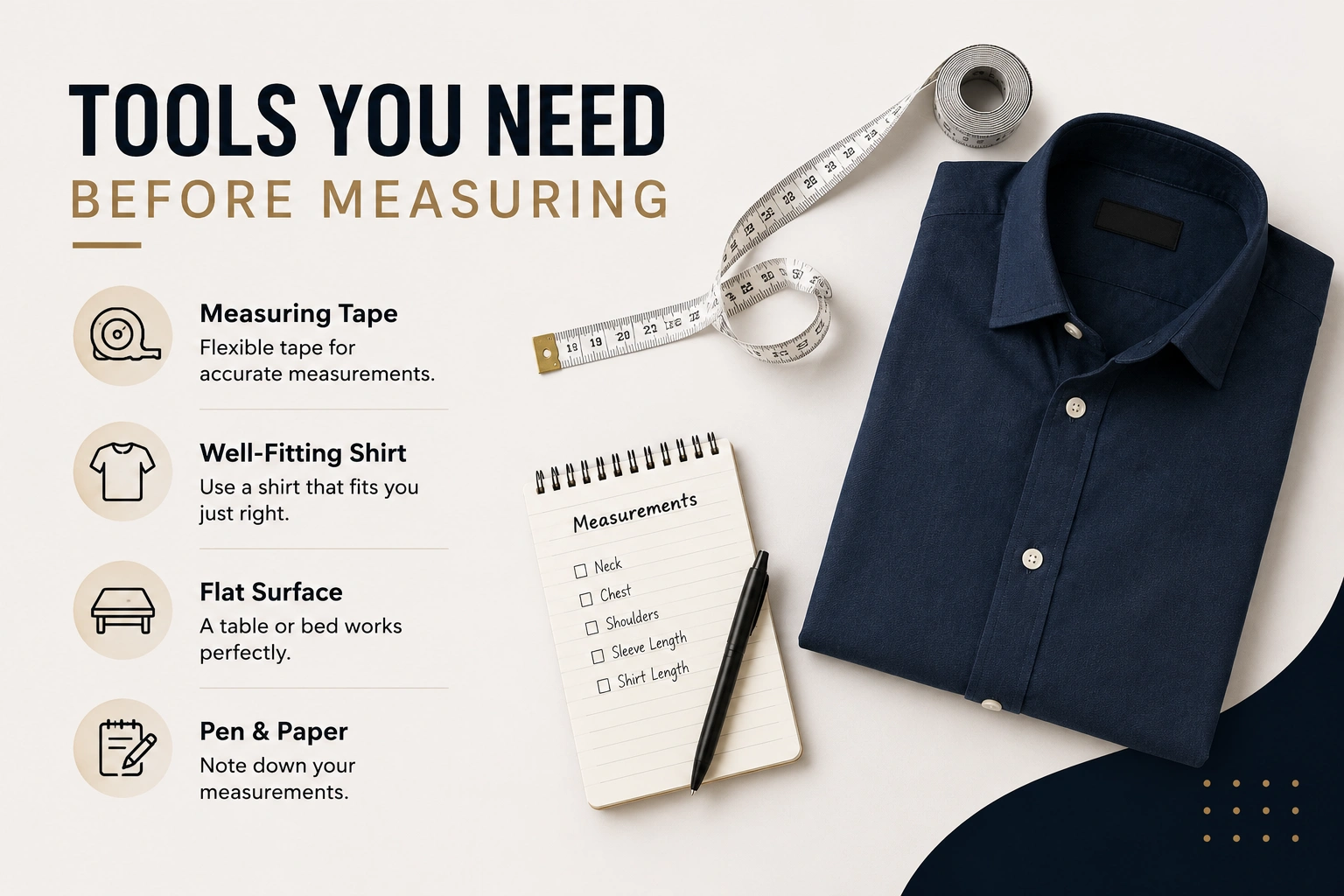
Essential tools needed before measuring shirt size including measuring tape shirt flat surface and notebook

Tools You Need Before Measuring

Before taking any measurements, it helps to have a few basic items ready. Using the proper tools makes the process quicker and improves accuracy.

You will need:

  • A soft measuring tape used for clothing measurements
  • A shirt that already fits you well
  • A flat surface such as a table, desk, or bed
  • A notebook or mobile phone for recording measurements

Many people try using a metal construction tape measure because it is readily available at home. While it may work in some situations, it is not ideal because it does not wrap naturally around the body. A flexible tailoring tape provides much more consistent results.

Taking a few minutes to prepare these items before measuring can prevent mistakes and save time later.

How to Measure Shirt Size Step by Step
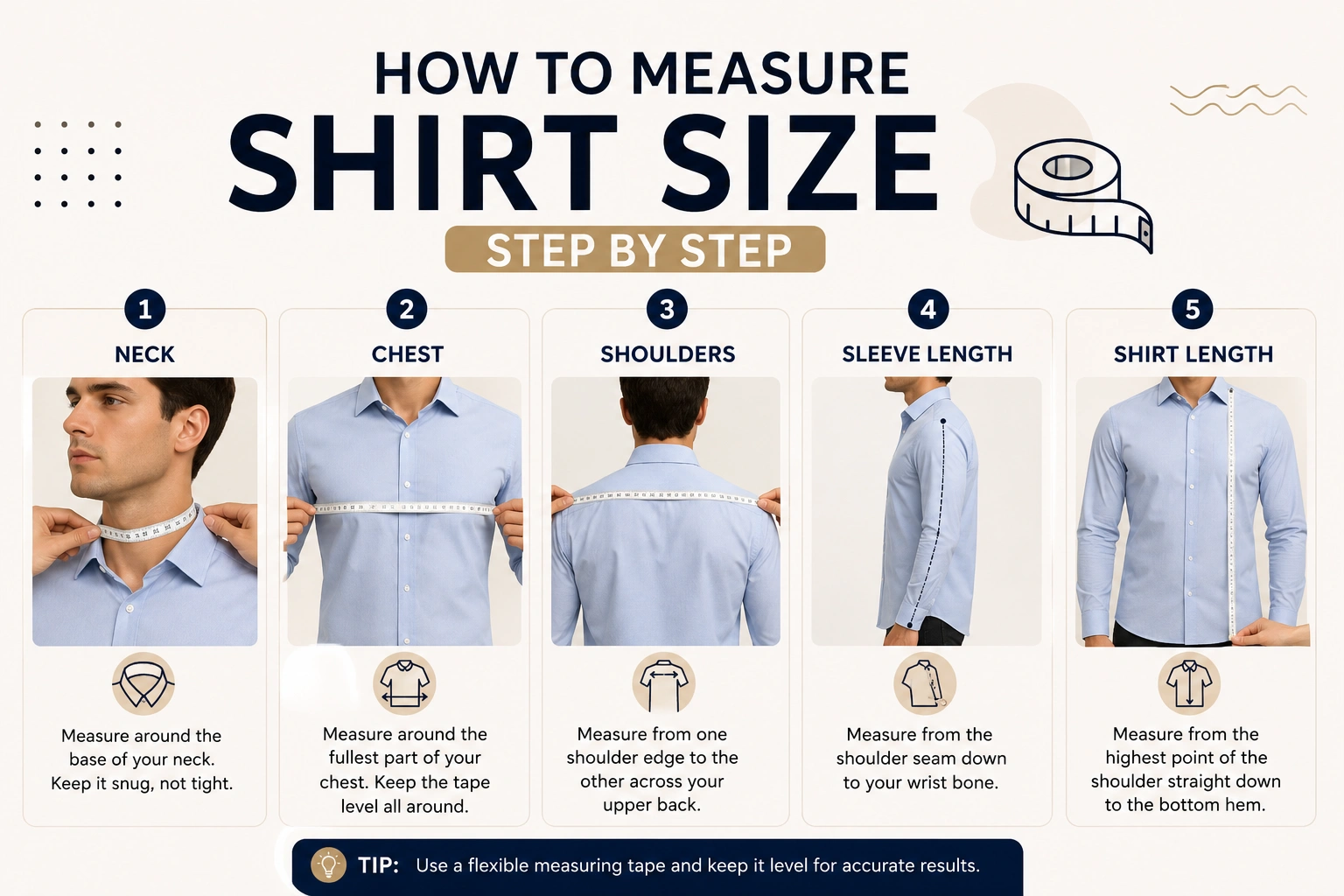
Step by step shirt size measurement guide showing neck chest shoulder sleeve and shirt length measurements
Learn how to measure neck, chest, shoulders, sleeves, and shirt length correctly.
``` Title: How to Measure Shirt Size Step by Step Caption: Follow these simple steps to determine your accurate shirt size. Description: Detailed shirt size measurement guide demonstrating how to measure neck circumference, chest width, shoulder width, sleeve length, and shirt length accurately.

Measure the Neck

The neck measurement is especially important for formal shirts and dress shirts.

For formal shirts, the neck measurement plays a significant role in overall comfort. A collar that is too tight can feel restrictive, while one that is too loose may look untidy when worn with a tie.

To measure your neck correctly:

  1. Place the measuring tape around the base of your neck where the collar normally sits.
  2. Keep the tape comfortably snug without squeezing the skin.
  3. Leave enough room for one finger between your neck and the tape.
  4. Record the measurement carefully.

As a general rule, the collar should feel secure while still allowing comfortable movement throughout the day.

Measure the Chest

The chest measurement is often the foundation of a shirt's sizing structure. Most brands use it as one of the primary references when designing their size charts.

To measure your chest:

  1. Stand upright with your arms resting naturally.
  2. Wrap the tape around the widest part of your chest.
  3. Ensure the tape remains level from front to back.
  4. Record the measurement without pulling the tape too tightly.

For the most accurate reading, avoid measuring over jackets, hoodies, or bulky clothing.
Measure the Shoulders

Shoulder width influences how a shirt drapes across the upper body. When the shoulder seam sits in the correct position, the entire shirt tends to look more balanced.

To measure shoulder width:

  1. Locate the outer edge of one shoulder.
  2. Measure across your upper back to the opposite shoulder.
  3. Follow the natural shoulder line rather than pulling the tape straight across.

If the shoulders are too narrow, movement may feel restricted. If they are too wide, the shirt can appear oversized even when the chest measurement is correct.

Measure Sleeve Length

Sleeve length affects both comfort and appearance. Even a well fitting shirt can look awkward if the sleeves are noticeably short or excessively long.

To measure sleeve length:

  1. Start from the shoulder seam.
  2. Extend the measuring tape down the arm.
  3. Measure until you reach the wrist area.
  4. Keep your arm slightly bent to mimic natural movement.

This measurement is particularly important when purchasing dress shirts.

Measure Shirt Length

Shirt length determines how the garment sits when tucked in or worn untucked.

To measure shirt length:

  1. Start from the highest point of the shoulder near the collar.
  2. Measure vertically down the front of the shirt.
  3. Continue until you reach the bottom hem.

People who regularly wear tucked shirts often prefer slightly longer lengths because they remain in place more effectively throughout the day.

Using an Existing Shirt for Measurements

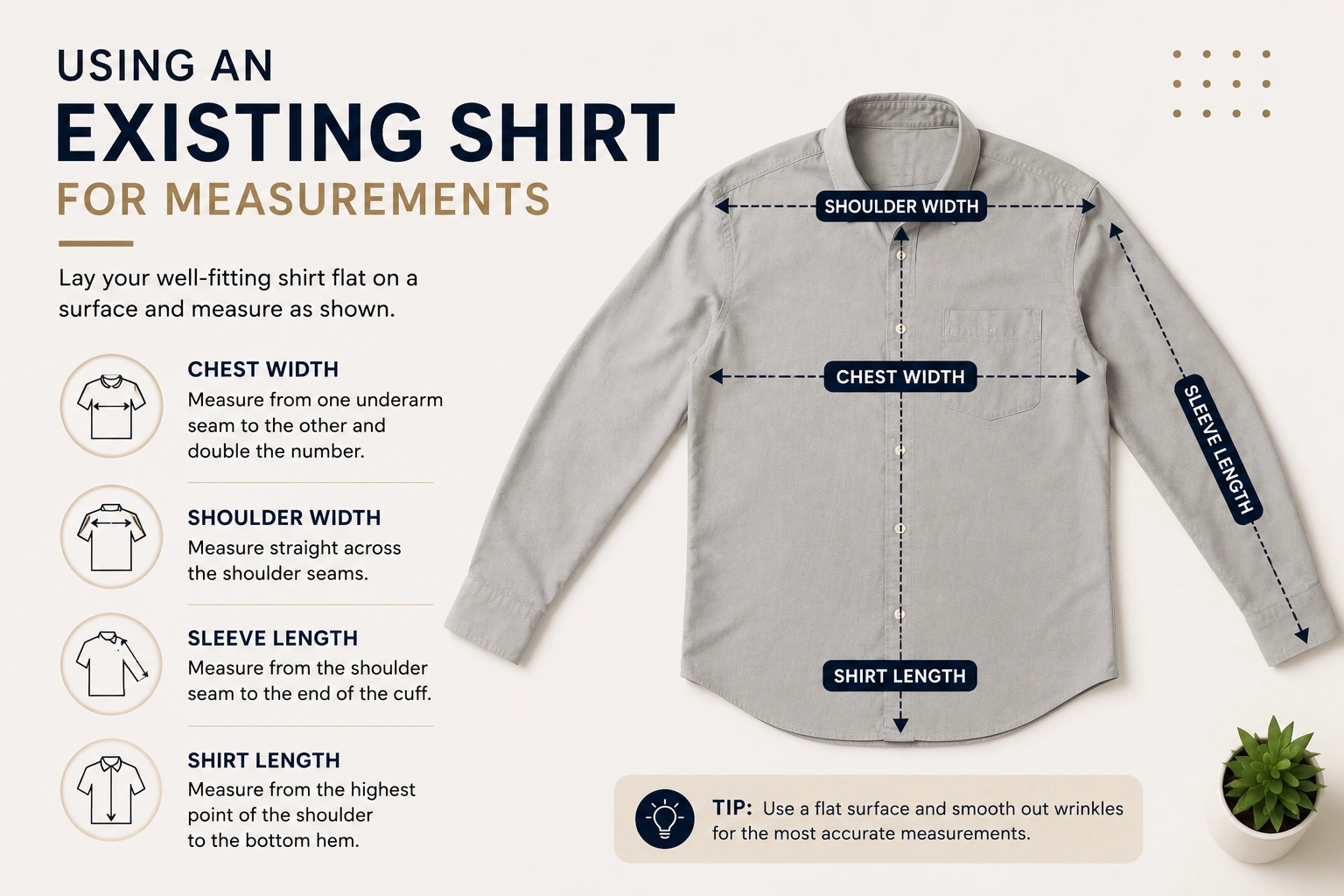
Using an existing shirt for measurements showing chest shoulder sleeve and shirt length measurement points
Measure a well fitting shirt to find your ideal shirt size for future purchases.

Using an Existing Shirt for Measurements

One of the most practical ways to determine your ideal size is to measure a shirt that already fits you well.

Rather than relying solely on body measurements, this method allows you to compare garment dimensions directly with a brand's sizing chart.

Lay the shirt on a flat surface and smooth out any wrinkles before measuring.

Chest Width

Measure from one underarm seam to the other and double the number.

Shoulder Width

Measure straight across the shoulder seams.

Sleeve Length

Measure from the shoulder seam to the sleeve cuff.

Shirt Length

Measure from the highest shoulder point to the bottom hem.

This method often provides the most reliable results when shopping online because you are comparing actual garment measurements.

Common Shirt Measurement Mistakes

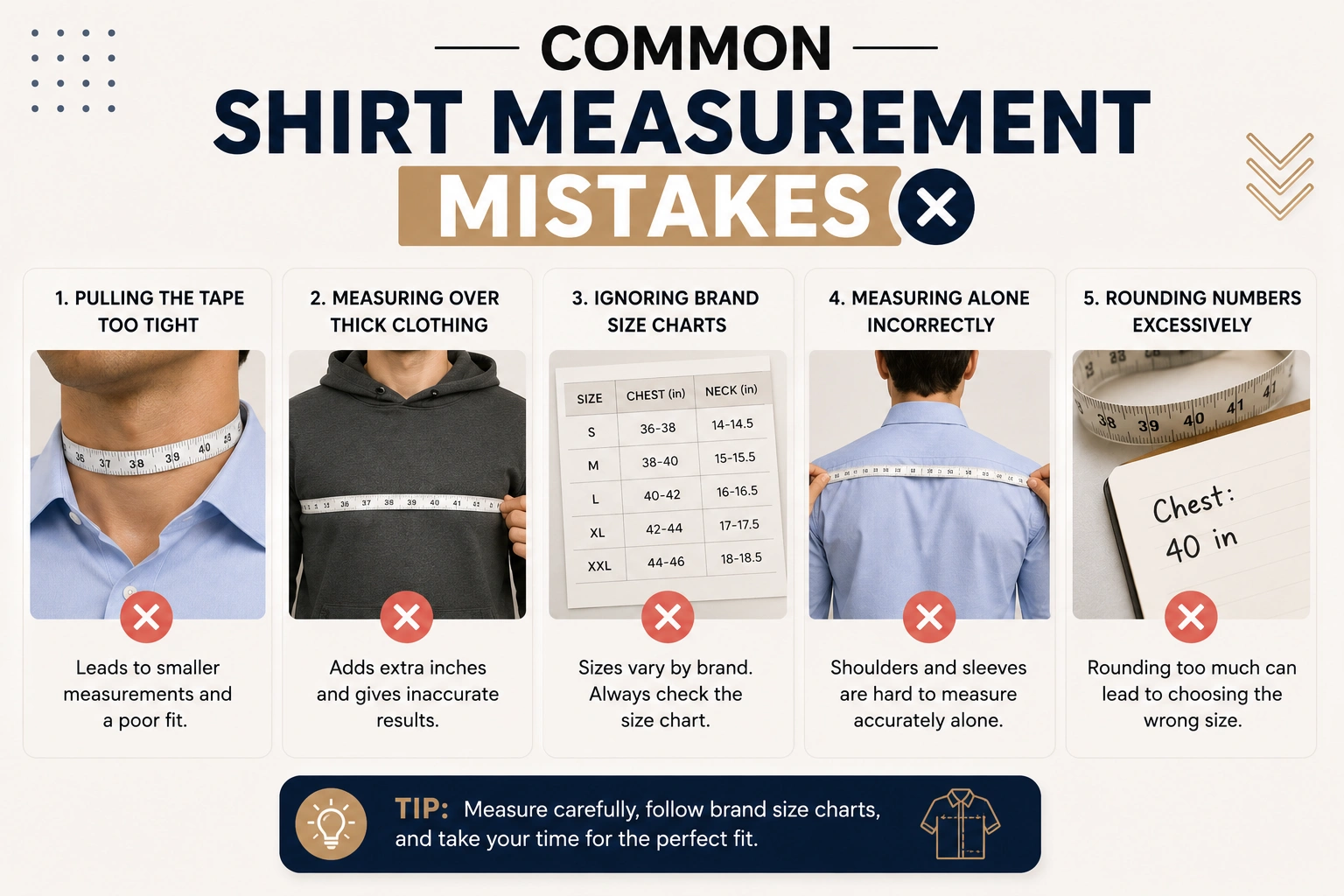
Common shirt measurement mistakes including measuring too tightly ignoring size charts and measuring over thick clothing
Avoid these common mistakes to improve measurement accuracy and shirt fit.
``` Title: Common Shirt Measurement Mistakes Caption: Small measuring errors can lead to poor fitting shirts and incorrect size selection. Description: Educational infographic highlighting common shirt sizing mistakes such as pulling the tape too tight, measuring over bulky clothing, ignoring size charts, and rounding measurements.

Pulling the Tape Too Tight

Even small measurement errors can result in a shirt that feels uncomfortable or looks poorly fitted. Understanding the most common mistakes can help you avoid unnecessary sizing problems.

Measuring Over Thick Clothing

Bulky clothing can add extra inches and distort measurements.

Ignoring Brand Size Charts

Different brands use different sizing standards. Always compare your measurements with the brand's size chart.

Measuring Alone Incorrectly

Shoulder and sleeve measurements are easier and more accurate when another person helps.

Rounding Numbers Excessively

Record measurements as accurately as possible rather than rounding significantly.

Understanding Shirt Fit Types

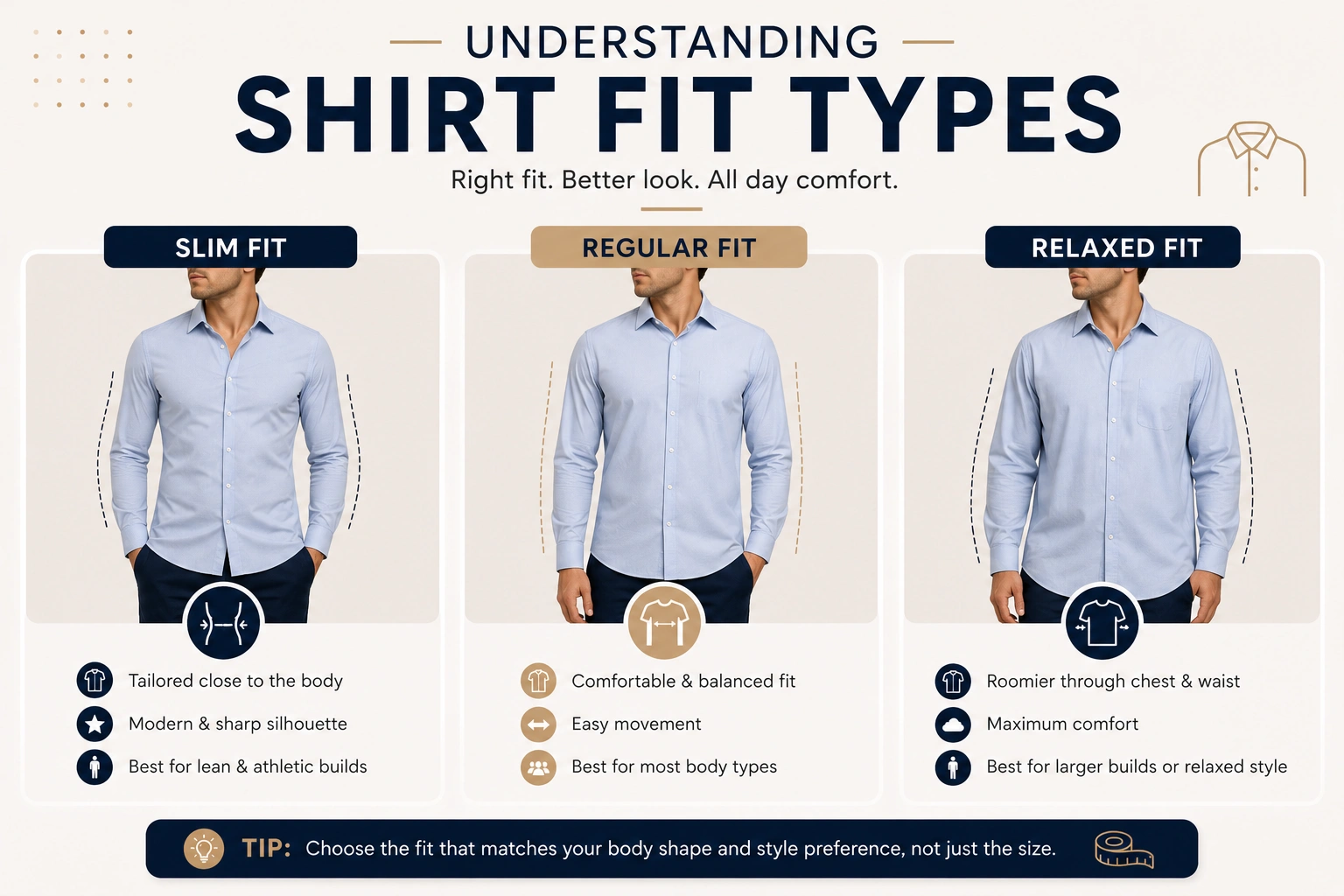
Comparison of slim fit regular fit and relaxed fit shirts for different body types and style preferences
Compare slim fit, regular fit, and relaxed fit shirts to find the style that suits you best.
``` Title: Understanding Shirt Fit Types Caption: Different shirt fits provide different levels of comfort, movement, and style. Description: Visual comparison of slim fit, regular fit, and relaxed fit shirts showing how each fit suits different body types, comfort levels, and fashion preferences.

Slim Fit

Designed to follow the body's shape more closely.

Best for:

  • Lean and athletic builds
  • Modern styling preferences

Regular Fit

Provides a balanced fit with moderate room for movement.

Best for:

  • Everyday wear
  • Most body types

Relaxed Fit

Offers extra room throughout the chest, waist, and sleeves.

Best for:

  • Maximum comfort
  • Larger body frames

A common mistake is choosing a larger size instead of selecting the appropriate fit type.

Shirt Size Conversion Tips

When using a shirt size measurement guide, keep these practical tips in mind:

  • Compare measurements rather than size labels.
  • Check whether measurements are listed in inches or centimeters.
  • Read customer reviews for fit feedback.
  • Pay attention to fabric composition since some fabrics shrink slightly after washing.
  • Save your measurements for future purchases.

Many experienced online shoppers maintain a note on their phone with all their shirt measurements. This simple habit makes future shopping faster and more accurate.

Frequently Asked Questions

How do I measure my shirt size at home?

Use a flexible measuring tape to measure your neck, chest, shoulders, sleeve length, and shirt length. Compare these measurements with the size chart provided by the brand.

What is the most important measurement for shirt sizing?

The chest measurement is generally the most important because it determines overall fit and comfort.

Can I measure a shirt instead of measuring my body?

Yes. Measuring a shirt that already fits well is one of the most accurate ways to determine your ideal shirt size.

How often should I check my measurements?

It is a good idea to remeasure every six to twelve months, especially if your weight or fitness level changes.

Why do shirt sizes differ between brands?

Brands use different sizing standards, fit profiles, and manufacturing specifications. Always rely on measurements rather than size labels alone.

Should shirt measurements be taken in inches or centimeters?

Either is acceptable, but make sure your measurements match the unit used in the brand's size chart.

Conclusion

Learning how to measure shirt size is one of the simplest ways to improve your wardrobe and avoid sizing mistakes when shopping online. By accurately measuring your neck, chest, shoulders, sleeves, and shirt length, you can make informed purchasing decisions and enjoy a better fit every time.

Whether you are buying a formal dress shirt, a casual button down, or an everyday work shirt, taking a few minutes to measure correctly can make a noticeable difference in comfort, appearance, and confidence.

Need More Style Guides?

Explore more men's fashion guides, sizing resources, and clothing care articles to build a wardrobe that fits better and lasts longer.

```
Shopping Cart
Scroll to Top