Discover the best fabric for trousers by comparing cotton, wool, linen, polyester, and blended materials to find the perfect balance of comfort, durability, breathability, and style.
Introduction
Choosing the best fabric for trousers is about much more than appearance. The fabric determines how comfortable your trousers feel, how well they fit, how long they last, and whether they suit the weather and occasion.
Many shoppers focus on color and design while overlooking the material itself. However, experienced clothing buyers know that fabric plays a major role in everyday comfort. A pair of trousers that looks great on a hanger may not perform well during a long workday or a summer outing if the fabric is not suitable.
In this guide, we will compare the most popular trouser fabrics, explain their strengths and weaknesses, and help you identify the best material for trousers based on your lifestyle, climate, and wardrobe needs.
Table of Contents
Why Trouser Fabric Matters
Key Factors to Consider When Choosing Trouser Fabric
Cotton Trousers
Wool Trousers
Linen Trousers
Polyester Trousers
Blended Fabrics
Best Fabric for Different Seasons
Best Fabric for Different Occasions
FAQs
Conclusion
Why Trouser Fabric Matters
The right fabric affects several important aspects of a garment:
Comfort throughout the day
Breathability in different climates
Durability and lifespan
Ease of maintenance
Overall appearance and drape
For example, someone working in a corporate office may prefer wool trousers for their polished look, while a traveler may value the easy care benefits of polyester blends.
Understanding fabric characteristics helps buyers make smarter purchasing decisions and avoid disappointment after purchase.
Key Factors to Consider When Choosing Trouser Fabric
Comfort
Comfort should always come first. Fabrics that feel soft and allow airflow are generally better for long hours of wear.
Climate Suitability
Different fabrics perform differently in hot, cold, humid, or dry environments.
Durability
Frequent wear requires fabrics that can withstand repeated washing and movement.
Maintenance
Some fabrics require professional cleaning while others can be washed easily at home.
Style and Appearance
The fabric influences how structured or relaxed the trousers look.
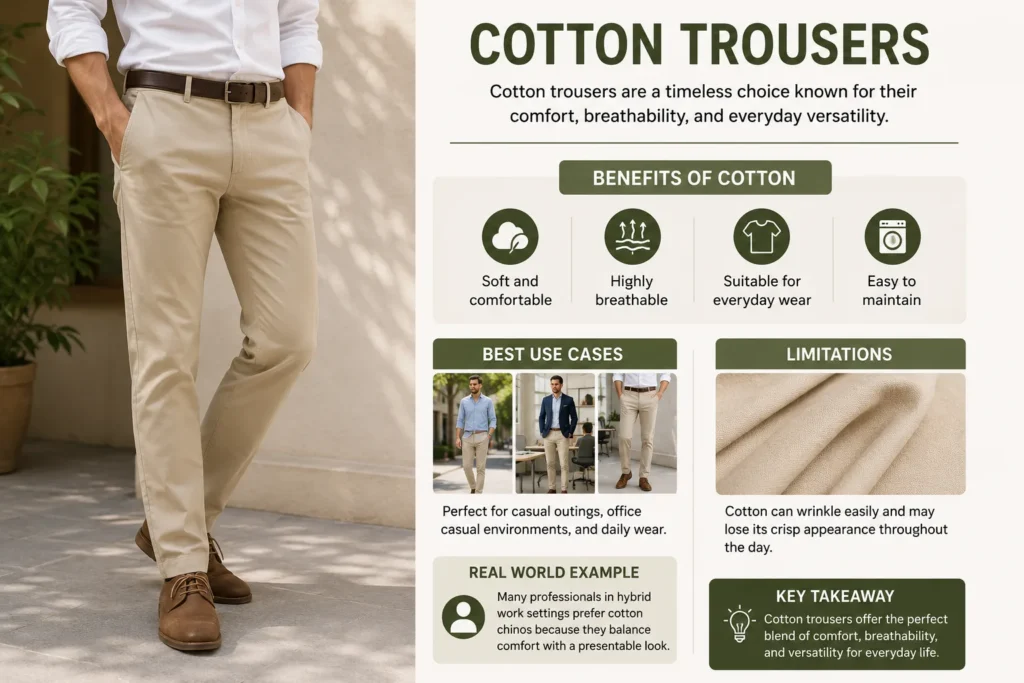
Cotton Trousers
Cotton remains one of the most popular trouser fabrics worldwide.
Benefits of Cotton
Soft and comfortable
Highly breathable
Suitable for everyday wear
Easy to maintain
Best Use Cases
Cotton trousers work exceptionally well for casual outings, office casual environments, and daily wear.
Real World Example
Many professionals who work in hybrid office settings prefer cotton chinos because they balance comfort with a presentable appearance.
Limitations
Cotton can wrinkle easily and may lose its crisp appearance throughout the day.
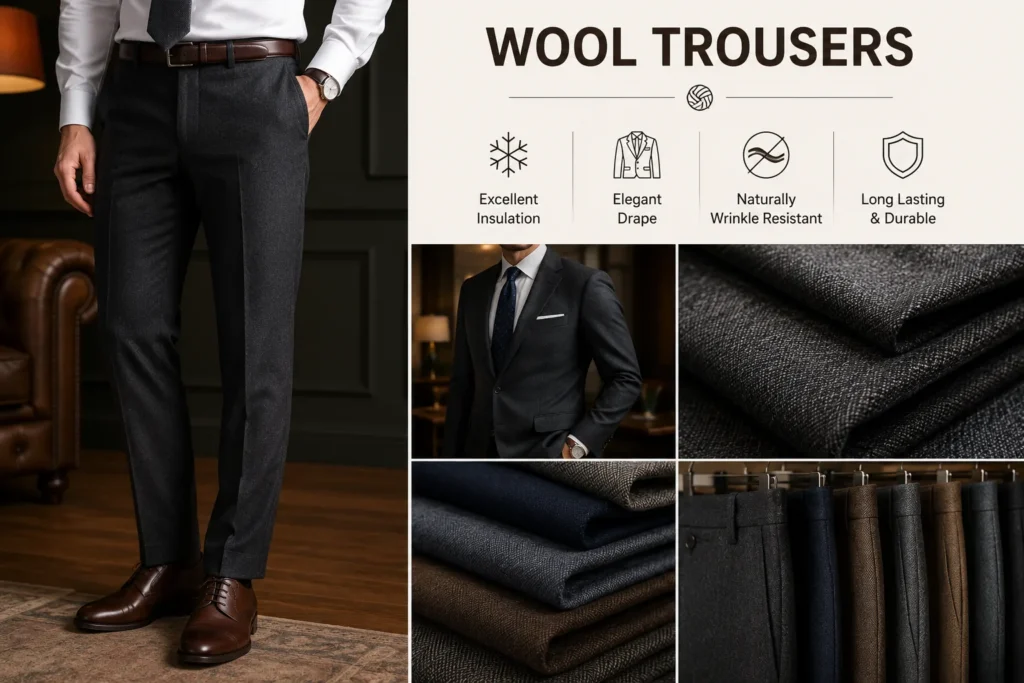
Wool Trousers
Wool is often considered a premium option for formal trousers.
Benefits of Wool
Excellent insulation
Elegant drape
Naturally wrinkle resistant
Long lasting when properly maintained
Best Use Cases
Business meetings, formal events, and cooler weather conditions.
Industry Insight
Tailors frequently recommend wool for professional wardrobes because it maintains its shape exceptionally well over time.
Limitations
Wool can feel warm in hot climates and often requires more careful maintenance.
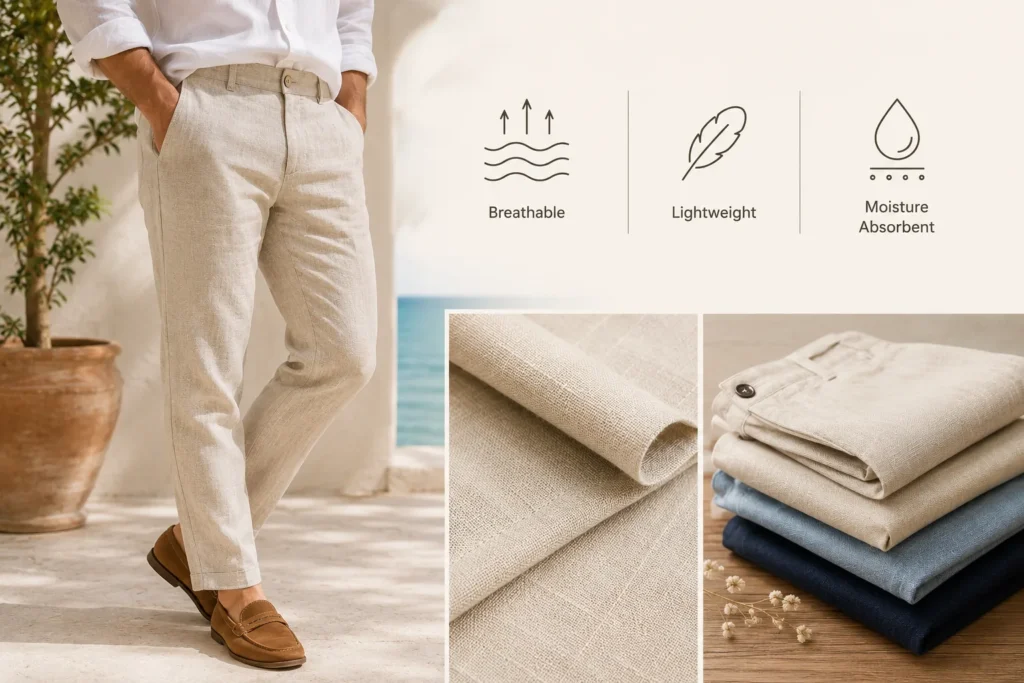
Linen Trousers
Linen is highly valued for warm weather comfort.
Benefits of Linen
Exceptional breathability
Lightweight feel
Excellent moisture absorption
Best Use Cases
Summer vacations, beach weddings, and tropical climates.
Mini Case Study
A traveler visiting coastal destinations during summer will often find linen trousers significantly more comfortable than heavier fabrics.
Limitations
Linen wrinkles naturally. While many people appreciate this relaxed look, others may find it too casual.
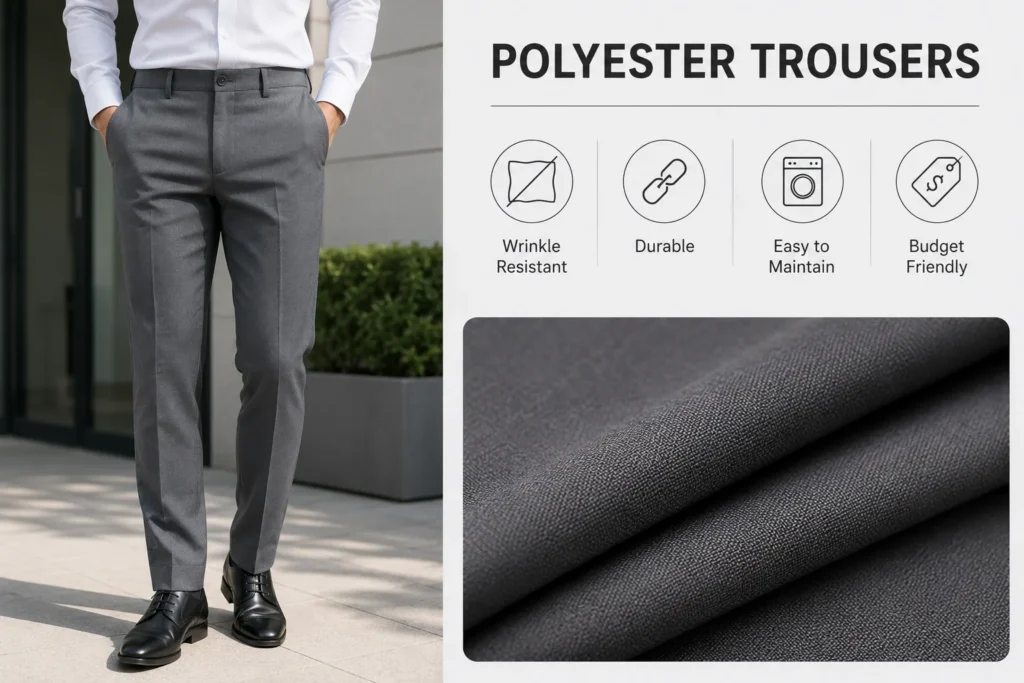
Polyester Trousers
Polyester is widely used because of its durability and affordability.
Benefits of Polyester
Resistant to wrinkles
Durable
Easy to maintain
Budget friendly
Best Use Cases
Daily commuting, uniforms, and travel wardrobes.
Limitations
Pure polyester may feel less breathable than natural fibers, particularly in hot weather.
Blended Fabrics
Many modern trousers use fabric blends to combine the strengths of multiple materials.
Popular Blends
Cotton and Polyester
Combines breathability with durability.
Wool and Polyester
Provides a professional appearance while improving wrinkle resistance.
Linen and Cotton
Offers improved comfort while reducing excessive wrinkling.
Why Blends Are Popular
Many apparel brands use blends because they create a better balance between comfort, durability, and affordability.
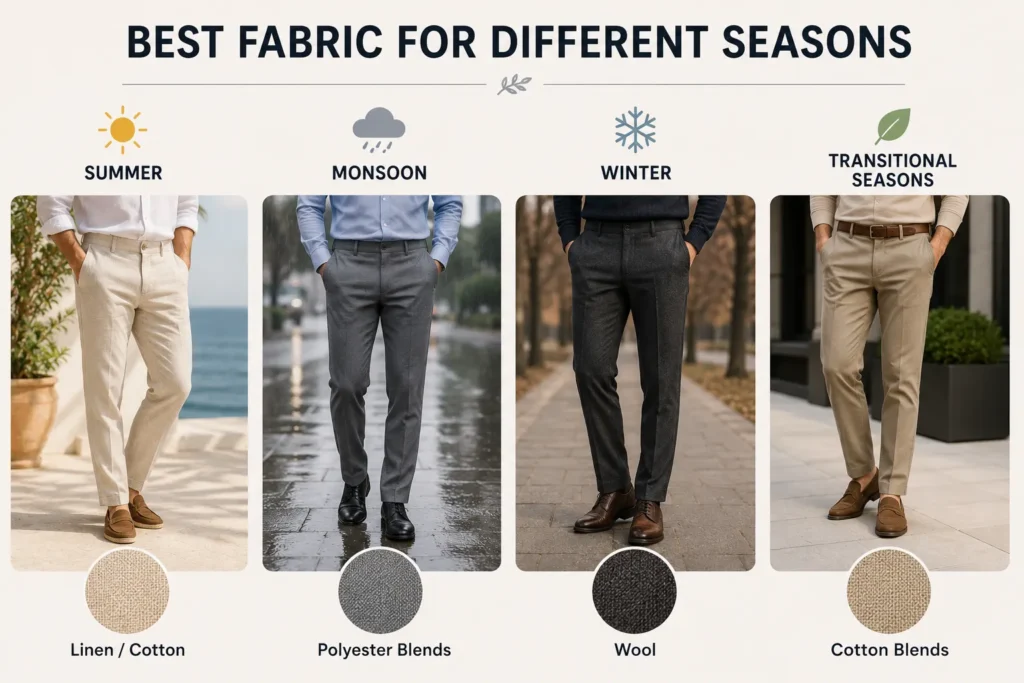
Best Fabric for Different Seasons
Summer
Linen and lightweight cotton are typically the best choices due to their breathability.
Monsoon
Polyester blends can be practical because they dry faster and resist moisture better.
Winter
Wool provides warmth and comfort during colder months.
Transitional Seasons
Cotton blends offer versatility during changing temperatures.
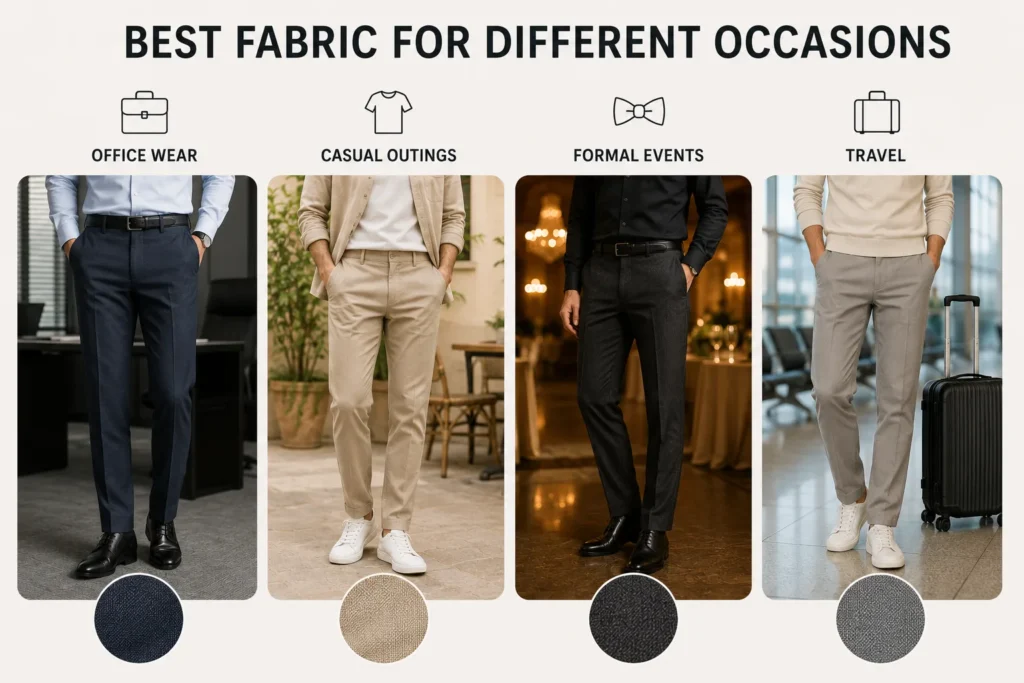
Best Fabric for Different Occasions
Office Wear
Wool, cotton blends, and premium polyester blends.
Casual Outings
Cotton remains a reliable choice for everyday comfort.
Formal Events
Wool trousers offer a sophisticated and polished appearance.
Travel
Polyester blends are often preferred because they resist wrinkles and require minimal maintenance.
Frequently Asked Questions
What is the best fabric for trousers overall?
Cotton is often considered the most versatile option because it offers comfort, breathability, and suitability for various occasions.
What is the best material for trousers for office wear?
Wool and wool blends are excellent choices for professional settings due to their refined appearance and durability.
Which trouser fabric is best for summer?
Linen is generally the preferred option for hot weather because of its exceptional breathability.
Are polyester trousers good for daily use?
Yes. Polyester trousers are durable, easy to maintain, and resistant to wrinkles, making them practical for daily wear.
Are blended fabrics better than pure fabrics?
In many cases, yes. Blended fabrics combine the strengths of different materials, offering a balance of comfort, durability, and ease of maintenance.
Conclusion
Finding the best fabric for trousers depends on where and how you plan to wear them. Cotton provides everyday comfort, wool delivers a polished look, linen excels in warm weather, polyester offers durability, and fabric blends create a practical middle ground.
Rather than focusing solely on style, consider climate, comfort, maintenance, and occasion. A thoughtful fabric choice can significantly improve how your trousers look, feel, and perform over time.
CTA
Looking for your next pair of trousers? Take a moment to check the fabric composition before buying. Understanding the material can help you choose trousers that offer lasting comfort, better value, and a style that suits your lifestyle.